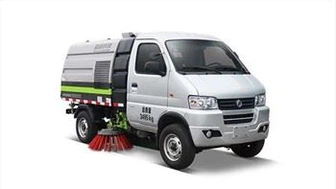
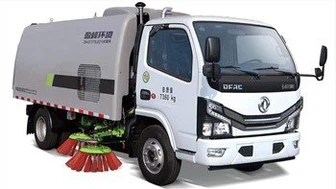
The development prospect of pure electric sanitation vehicle
In addition to battery technology, several core technologies of pure electric vehicles have the ability to quickly reach industrialization, only the battery energy density and long charging time restrict the rapid popularity of pure electric vehicles. Just imagine, if the cars are pure electric, then each car must be equipped with a charging pile (because the charging time is long and can not be shared as many cars as gas stations), charging facilities will be as many as trees, resulting in a huge waste of resources. Large vehicles to pull the heavy battery walking, the quality of the maintenance is greatly improved, thus greatly reducing the load quality, as an energy-saving vehicle is out of the question.
Therefore, battery technology must have a qualitative breakthrough, optimization and improvement is not of any substantive significance, otherwise, pure electric vehicles can only be used as a transitional model for appropriate development. From the industry, it is also widely believed that fuel cells and hydrogen power are the ultimate cars. From a worldwide perspective, pure electric vehicles are only limited to micro and light vehicles, and only Tesla, Leaf and other famous brands have done well in industrialization, and the shortcomings of the battery are still not well solved. From China's point of view, China's electric vehicles are basically micro light vehicles, industrialization is the best low-speed electric vehicles, in recent years, there are hundreds of thousands of annual production and sales. In addition to the price is not high, the use of very low cost is the most important factor, to meet the most extensive income is not rich family travel dream. As the best company in the industrialization of new energy vehicles, Toyota divides the future car power into three categories: the first category is a small family vehicle used for close-range mobility, which is a pure electric vehicle; The second category is the general family passenger car, for hybrid and plug-in hybrid electric vehicles; The third category is commercial vehicles used for long-distance transportation, which are fuel cell vehicles. In these powertrains Toyota believes the ultimate fuel will be hydrogen powered by electricity and water.
Based on the above analysis, the development of pure electric sanitation vehicles has made appropriate breakthroughs from the following points:
From the positioning point of view, it must be positioned on light and miniature electric vehicles. In many cities, there are a large number of electric three-wheeled and four-wheeled sanitation vehicles, but their data is not registered in the scope of the national vehicle management department.
From a regional point of view, the product should make a breakthrough from the Beijing-Tianjin-Hebei region, because the haze control task in this region is the tightest and strictest, and the effect of the capital circle can not be underestimated, and the current demand must be the largest (of course, not low-speed electric vehicles). China New energy Vehicle under China Chengtong Holding Group has a full set of pure electric vehicle core technology, is a rare domestic with the most complete laboratory and equipment, with charging facilities construction, vehicle operation plan, vehicle maintenance, vehicle remote monitoring and other complete system solutions. In the near future, Beijing will have a leading urban new energy logistics distribution vehicle network system.
From the functional point of view, it is necessary to develop products with few functions and short duration of operation. Products with many functions last for a long time and consume more power, so the driving range is difficult to guarantee. There are many electric road sweeper in the place where the charging facilities are not perfect, there is often a power consumption in the middle of the operation, and there is an incident that has to be towed back by the internal combustion engine, coupled with the road sweeping effect is not very ideal, and it is abandoned by the sanitation department.
From the perspective of development direction, it is necessary to develop products with fixed mileage and routes. For example, in the case of imperfect infrastructure, the promotion of LNG natural gas vehicles has encountered great obstacles, but it is from the tractors and long-distance buses with stable cargo sources and fixed routes that breakthroughs have been made, so that LNG natural gas vehicles have quickly made a qualitative leap in quantity.
From the point of view of the use environment, it should be positioned in residential areas and public densely populated areas. For example, garbage collection trucks to residential areas to collect garbage is often before people get up early, traditional internal combustion engines are very noisy, affecting residents' rest, and the noise itself is also a kind of pollution, and electric vehicles do not have this drawback.
If the situation permits, can be combined with local, battery manufacturers, chassis manufacturers, charging facilities manufacturers and other development of universal, standardized fast loading and unloading battery packs, in each charging facility outlets have charged standby battery packs, pure electric sanitation vehicles if the power is insufficient, you can quickly change the full battery pack to the network, and the loss of battery packs to the network for charging, This can solve the problem of long charging time and affect the efficiency.